

Nature Broking partners with Great Yellow to connect more buyers with Landscape Recovery projects
Today we are announcing our partnership with Great Yellow, enabling our clients to engage with a broader portfolio of landscape recovery projects.
Meeting buyer needs
As UK nature markets mature and more businesses work to meet net zero targets and commitments on nature, buyers want projects delivering high quality outcomes and a straightforward way to engage with them. Great Yellow works with nature recovery projects that are regenerating whole catchments across the UK. They include 11 Defra Landscape Recovery projects, together restoring more than 300,000 hectares, giving buyers outcomes at a scale single or smaller sites cannot match. Our partnership brings that scale to more carbon buyers through our network.
The projects will sequester carbon at scale, delivering credit types including woodland, soil, saltmarsh and peatland. Working across entire landscapes, they also deliver benefits for biodiversity and water, resilience for supply chains and infrastructure, and social and public health co-benefits, while continuing to produce food through regenerative agriculture. Great Yellow works with each project from commercial strategy and blended finance planning through to capital raising and ecosystem services trade, with independent verification built in, so investors can back it and buyers have confidence in what each project delivers.
‘We’re proud to partner with Great Yellow to bring investment into landscape recovery at scale. Nature Broking enables corporate buyers to navigate carbon markets with confidence, and this partnership creates a direct route to some of the most ambitious UK projects that deliver for climate, nature and local communities.’ Luke Baldwin, CEO, Nature Broking.
On the ground
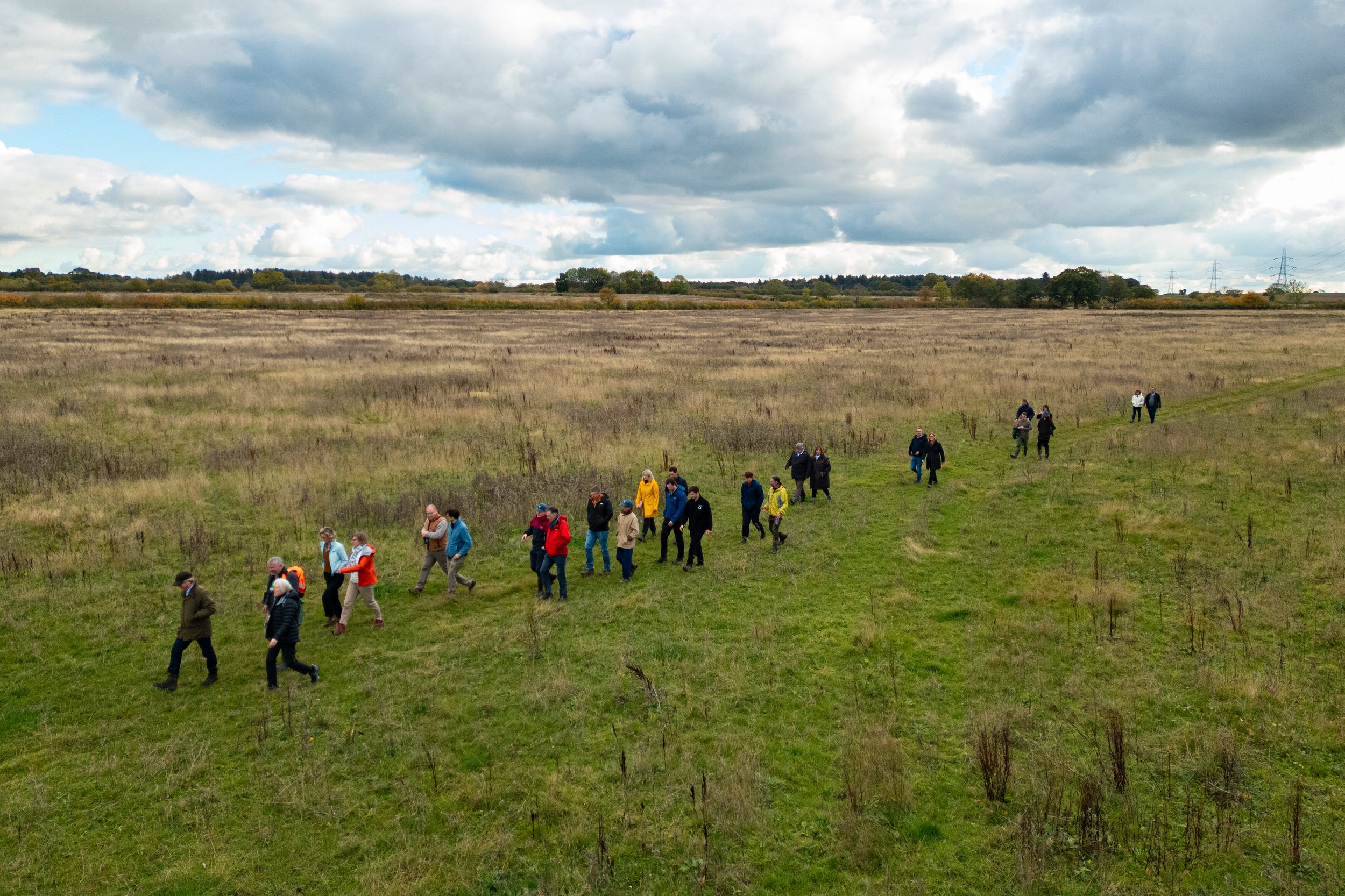
We’re marking the partnership today at Lincoln & Witham, a Defra round two Landscape Recovery project led by Doddington Hall, with Great Yellow as commercial partner. Together with Great Yellow, we have gathered buyers to spend a day on the ground at Wilder Doddington, seeing the project and hearing directly from the team delivering it. Lincoln & Witham is designed to deliver carbon units alongside biodiversity units, water quality improvement, natural flood management and increased recreational access. As a 30-year programme, the area consists of approximately 5,529 hectares across 30 landholdings in the Lincoln and Witham catchment, combining habitat creation and wetland restoration with regenerative agriculture to address flood risk, water quality decline and biodiversity loss.
What the partnership means for the people we work with
For buyers: Carbon buyers can engage with a portfolio of nature recovery projects backed by a 20-year Defra contract to contribute to climate and nature commitments. Independent verification, including Isometric for soil carbon, alongside other nature market mechanisms such as BNG, NFM and water quality outcomes, is built into how projects come to market. Our partnership with Great Yellow gives buyers a further route into this portfolio.
Across the partnership, 204,000 carbon units are under development: 150,000 soil carbon (the first 15,000 delivering Q4 2027, with issuance projected annually after) and 54,000 woodland (8,000 as forward-sold PIUs pending verification). A further 870,000 credits are open to commit to now, spanning woodland, soil, saltmarsh and peatland.
For project investors: A wider pool of buyers gives the projects you back an additional, clear route to market, through a partner with established corporate relationships.
For projects: The partnership gives Great Yellow’s partner projects greater market exposure for their carbon outcomes, through our network of buyers, as part of Great Yellow’s broader go-to-market execution.
Buyers interested in the portfolio can talk to either team: hello@naturebroking.com or trade@greatyellow.earth.