

Project Spotlight: Boomitra - Unlocking Resilience through Vital Agricultural Regeneration and Adaptation (URVARA)
Summary
Location: South West India
Credit Type – Removals through Nature Based Solutions
Carbon standard: Social Carbon
Pathway: Regenerative Agriculture
Project Overview
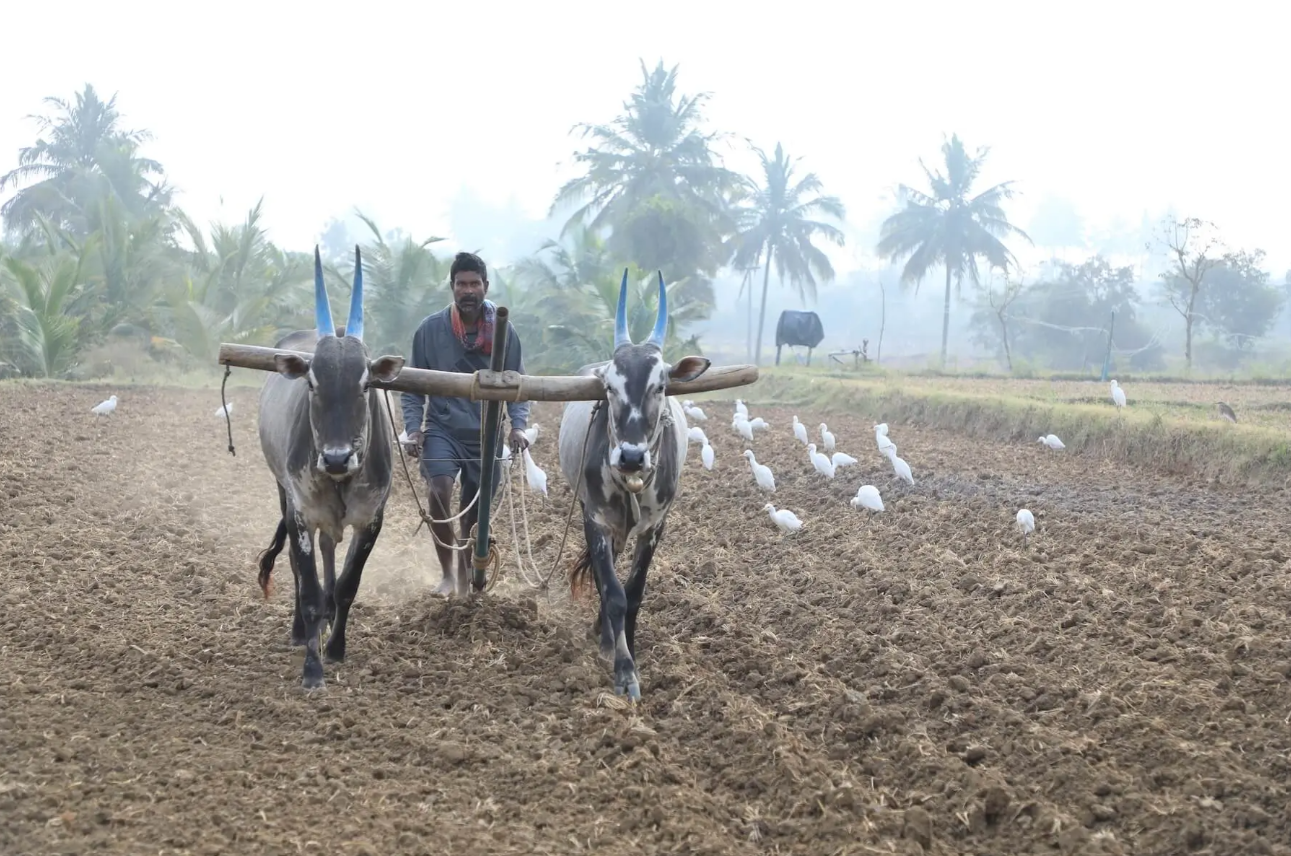
This project works with Indian farmers to help them adopt improved agricultural practices such as residue management and enhanced cropping practices that sequester carbon while increasing productivity. The region is largely composed of small and marginal farmers, with each farming just a few hectares of land. As a result, these farmers are highly susceptible to variabilities arising from markets and weather. Over the last century, agriculture in the region has undergone a dramatic shift towards intensification. Since the late 1940s, yields of all staple crops have seen a several-fold increase. This increase was necessary to feed a growing population, but at the same time, it led to an increase in the amount of synthetic fertiliser applied to farms, along with other unsustainable practices.
High biodiversity and social impact
The project's regenerative agricultural practices, such as crop rotation and intercropping, significantly enhance biodiversity and ecosystem health by promoting diverse cropping systems and creating favourable conditions for various species.
The project directly uplifts the livelihoods of small and marginal farmers through financial benefits from carbon credits and provides employment to local communities. It promotes sustainable farming practices among diverse agricultural communities.
Three issues - solved
Boomitra’s URVARA approach helps to solve issues affecting the smallholders’ subsistence farming outcomes.
Minimal Soil Disturbance: The project ensures minimal disturbance of the soil through tillage or use of chemicals, both of which help to preserve soil biology. Moreover, regenerative agricultural practices aid in the reversal of land degradation, facilitating the restoration of carbon to the soil, and ultimately leading to improved overall soil health.
Resilient Communities: It equips the region’s many small farmers with the knowledge and resources to counteract land degradation, replenish soil carbon, and fortify resilient agricultural and food systems.
Farm Diversity: It encourages diversity in crops, pastures, livestock and wildlife to strengthen the farms’ resilience. Boomitra helps to advance local farming knowledge, and these advancements provide farmers with the tools and resilience needed to support and stabilise their livelihoods.
Permanence Risk Assessment
The project’s permanence risk was assessed using the SOCIALCARBON AFOLU Non-Permanence Risk Tool, which evaluates internal, external and natural risk factors. It received a low risk rating of 10, meaning 10% of its carbon removals go into a buffer to insure against reversals. This rating reflects low wildfire risk, soil-stabilising regenerative agricultural practices, and 30-year renewable agreements with implementation partners and farmers that extend beyond the initial crediting period.
Leakage Risk Assessment
Leakage is assessed under the SCM0005 v2.0 methodology across three sources: declines in crop productivity, increased use of non-renewable cooking fuel, and manure brought in from outside the project area. It is set to zero because all manure and compost are produced on-site without displacing livestock, and project farmers mainly cook with LPG, so they are unlikely to switch to burning crop residues. As a safeguard, Boomitra carries out productivity studies every ten years, and any project-related yield decline greater than 5% triggers immediate credit deductions.
Details on MRV for methodology and project
The project’s monitoring, reporting and verification (MRV) follows the SCM0005 v2.0 methodology. It measures soil organic carbon to 30 cm at pixel level using remote sensing and machine learning models, calibrated against over 1 million ground-truth samples from India’s National Soil Health Card dataset. Management practices such as reduced tillage and fertiliser use are tracked through annual surveys, geospatial monitoring and the Boomitra Farmer and Rep apps. The data feeds into monitoring reports that an independent Validation and Verification Body (VVB) verifies at set intervals.