

Project Spotlight: O.C.O Technology
Summary
Carbon standard: Puro Standard
Project developer: O.C.O Technology Limited
Pathway: Carbonated Materials
Location: Avonmouth, UK
Project Overview
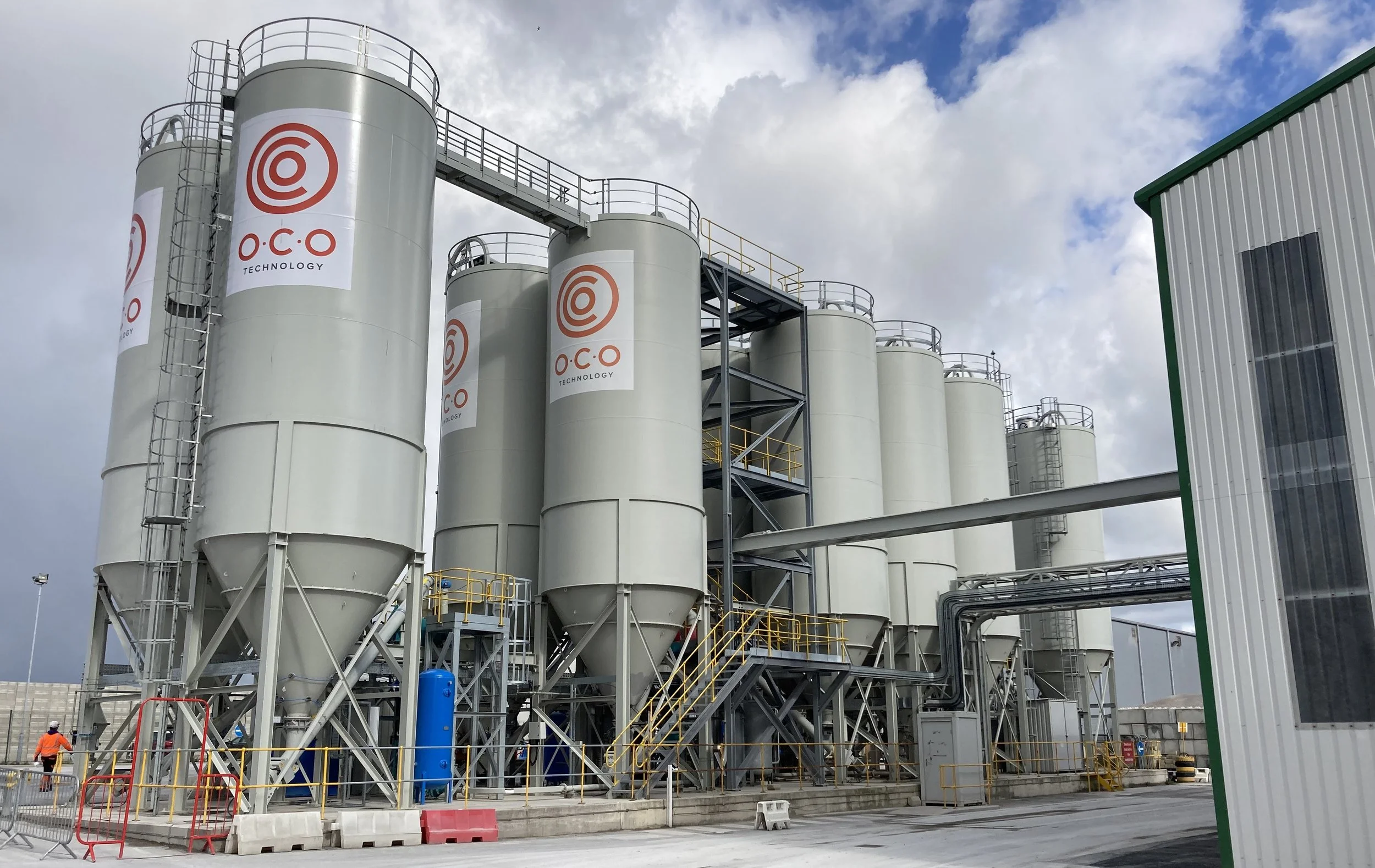
Most carbon removal happens out of sight. Carbon is stored in forests, soils or deep underground, and buyers rely on models and monitoring to know it is there. At Avonmouth, just outside Bristol, you can pick it up in your hand.
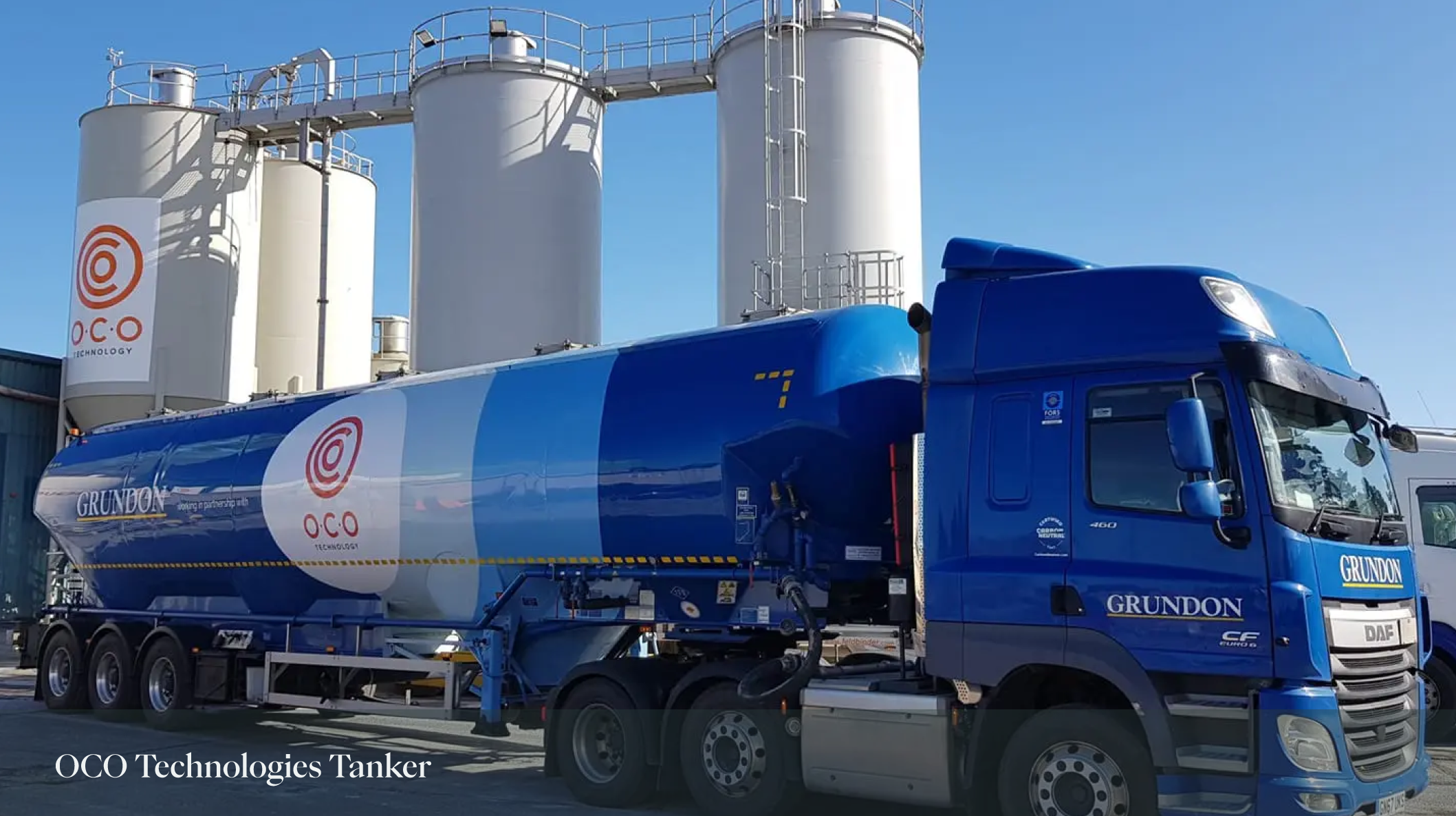
O.C.O Technology's Avonmouth Production Facility turns captured CO₂ and industrial waste into Manufactured LimeStone (M-LS), a construction aggregate with carbon locked inside it. It is used in real building projects, and it is one of the more distinctive removal projects we work with.
Limestone, made in hours
Limestone forms naturally when CO₂ reacts with minerals over long periods. O.C.O accelerates the same underlying mineral reaction by exposing alkaline material to CO₂ under controlled conditions, allowing the reaction to occur in hours or days. The raw material is air pollution control residue (APCr), a waste by-product of energy-from-waste plants. Left alone, it would be chemically treated and landfilled. Instead, O.C.O combines it with CO₂ through accelerated carbonation, forming stable calcium carbonate within the aggregate. The carbon is stored in the same mineral form as natural limestone.
Each tonne of Manufactured LimeStone captures 144 kg of CO₂. The credited figure is lower, and deliberately so. Only biogenic CO₂ and CO₂ absorbed from the air during curing count towards credits. Fossil-derived CO₂ is deducted, and a verified lifecycle assessment accounts for production emissions. The net removal factor is approximately 41–47 kg of CO₂ per tonne. For buyers, this conservative approach means that every credit reflects carbon that has genuinely been removed.
Three problems, one process
What makes Avonmouth stand out is the number of problems it addresses at once:
Carbon: CO₂ is removed and stored permanently in solid form.
Waste: a hazardous industrial residue is diverted from landfill.
Construction: builders get a lower-carbon aggregate, reducing the need for newly quarried stone.
For a sector that accounts for a significant share of global emissions, a material that stores carbon rather than adding to it is a meaningful shift.
Permanent by design
Once CO₂ has mineralised, it is chemically bound within stable carbonate minerals. Puro’s Carbonated Materials Methodology assesses this form of storage as having a durability of more than 1,000 years, with a very low risk of reversal under normal use and foreseeable end-of-life conditions.
O.C.O assesses intended applications and storage conditions through its permanence controls, helping ensure that M-LS is directed towards suitable construction uses.
Carbon finance plays an important role in helping O.C.O compete with conventional treatment-and-landfill routes and invest in the continued development and expansion of its technology. Without projects such as Avonmouth, APCr would typically be treated and sent to landfill rather than transformed into a carbon-storing construction material.
The facility is certified under the Puro Standard, with an initial audit in 2022 and annual output audits since, covering everything from CO₂ source to double-counting. Its multi-year track record has earned it ongoing issuance rights under the standard.
Join us at OCO Technologies - 19th November 2026

This visit, aimed at companies wishing to invest in and learn more about technology-based carbon credits, will showcase the carbon capture process on the ground, and enable CSO’s, financial controllers, senior leadership and carbon market participants to make informed decisions about the value of these solutions.